
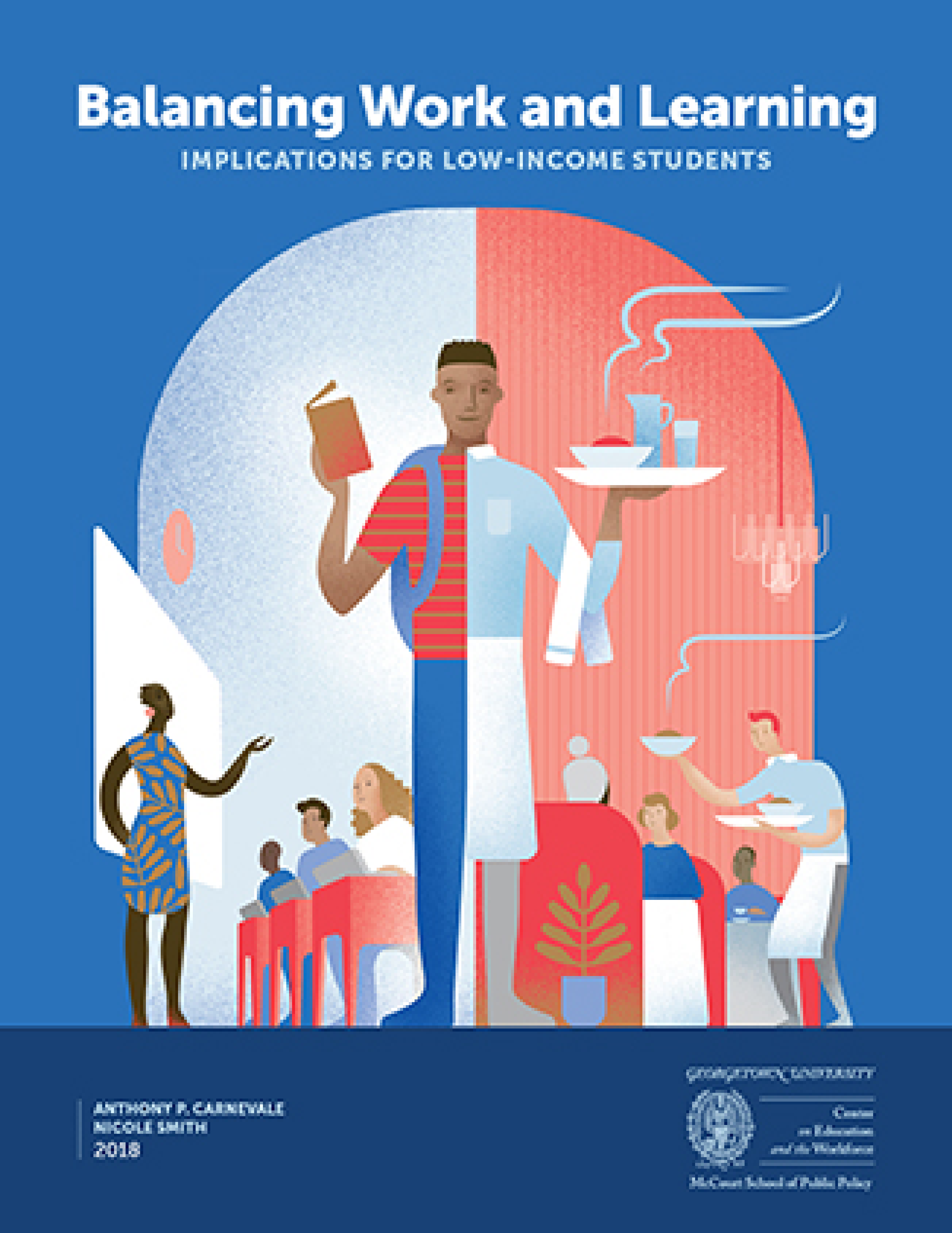
Balancing Work And Learning

Implications for Low-Income Students

Full Report

Executive Summary

Video

PowerPoint

Press Release

It has gotten increasingly harder for students to work their way through college, especially for low-income students who face steep challenges when combining work and learning. Students from higher-income families tend to benefit as they work fewer hours in jobs directly related to their fields of study. Low-income working college students often work longer hours, and as a result, are less likely than their higher-income peers to get good grades and attain bachelorโ€™s degrees or any credential at all.

Key Findings

1

Of the 14 million working learners, about 6 million (43%) are low-income students.
2

Low-income working learners are disproportionately Black (18%) and Latino (25%), women (58%), and first-generation college-goers (47%), while higher-income working learners tend to be White (73%).
3

Low-income working learners are more likely to enroll in certificate programs and attend either two-year public or for-profit colleges than higher-income working learners, whereas higher-income working students are more likely to enroll in bachelorโ€™s degree programs and attend selective four-year colleges and universities.
4

Low-income working learners are less likely to earn a credential overall, even if they come from the upper end of the academic performance distribution.

Video

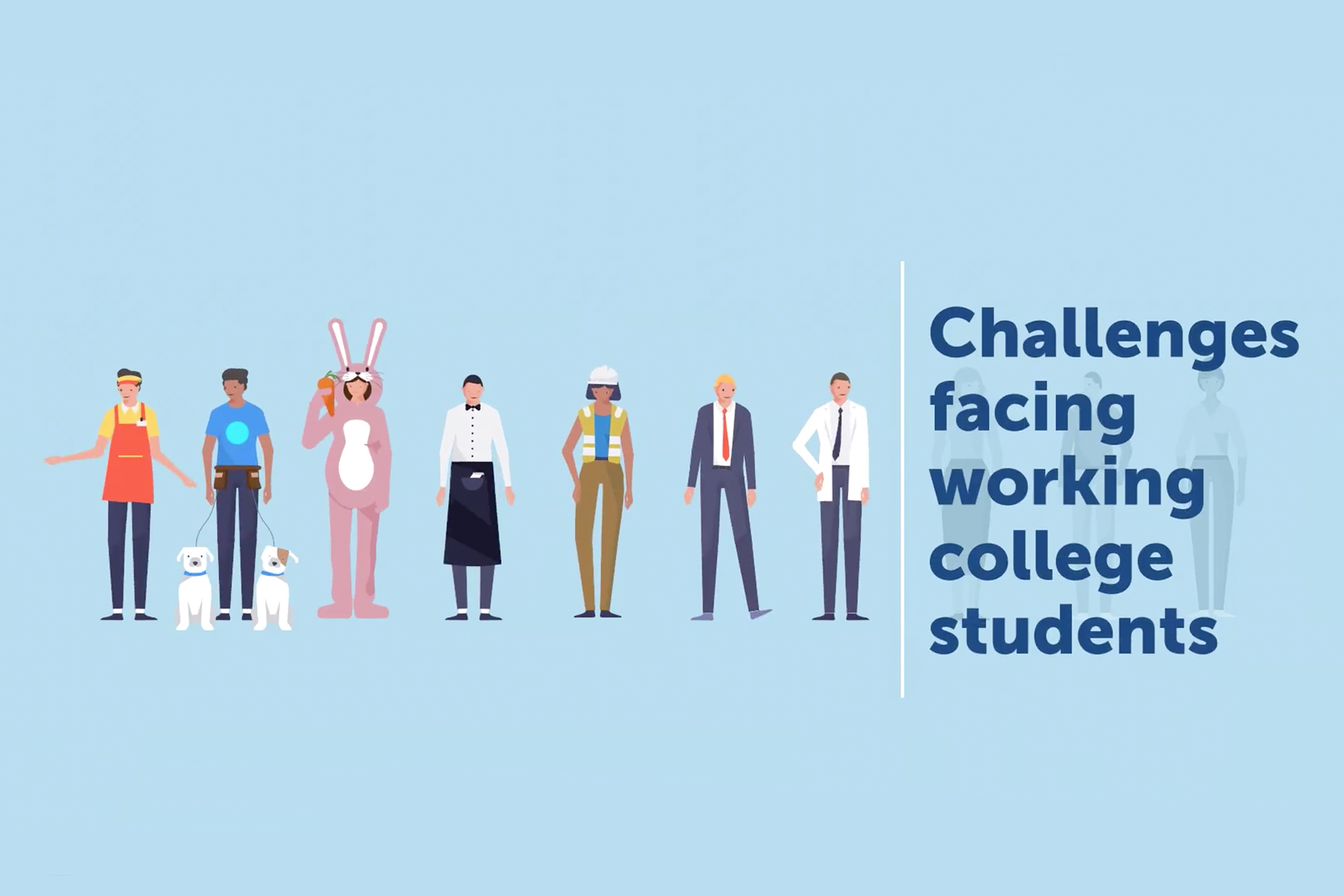
Watch our video to learn more about the challenges that low-income working learners in college face.
Resources

Our report finds that while working and studying generally helps students from higher-income families, low-income students face steeper challenges when combining work and college.
Read Full Report
Full Report
Learn more
Executive Summary
Learn more
Video
Learn more
PowerPoint
Learn more
Press Release
Learn more